
Lower Entry Cost
Pay only for the car shell. The battery - the most expensive part - is leased, reducing upfront cost by up to 40%.
The revolutionary way to own an EV in India. Separate the vehicle cost from the battery cost to enjoy lower upfront prices and worry-free maintenance.
Last updated: 19 June 2026

Battery technology is evolving fast. BaaS protects you from obsolescence while slashing costs.
Pay only for the car shell. The battery - the most expensive part - is leased, reducing upfront cost by up to 40%.
Zero worries about battery degradation. If the range drops, the service provider replaces the pack at no extra cost.
As battery technology improves, upgrade to newer, more efficient packs without buying a whole new car.
Used car buyers don't fear 'dead batteries' because the car is linked to a subscription with guaranteed health.
Top cars available with battery subscription plans.

Brave. Bold. Electric.
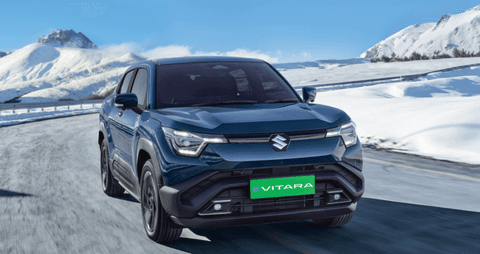
Indias Most Awaited Electric SUV
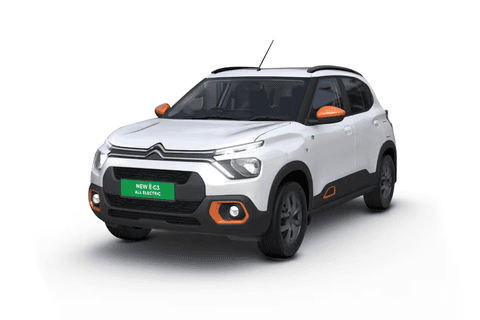
Jo kabhi na ruke.
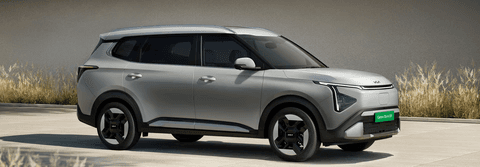
It's an E.We.
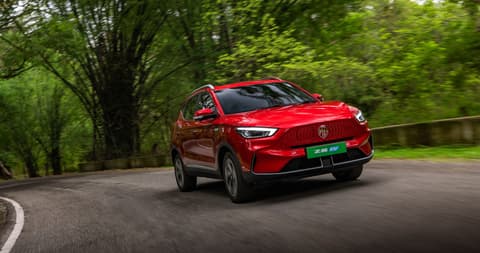
Here to change mindsets.
Live Business Class.
Everything you need to know about BaaS and its impact on your wallet.
It depends entirely on how much you drive. BaaS saves you ₹3–5 lakh upfront by removing the battery cost from the purchase price. At ₹3.5–4.5/km, a moderate driver covering 800–1,000 km/month pays ₹2,800–4,500/month in battery rental. A low-mileage driver (under 700 km/month) comes out ahead with BaaS over 5 years. A high-mileage driver covering 1,500+ km/month may pay more in rental fees than the battery is worth. Use GaadiMate's TCO Calculator to run your exact numbers.
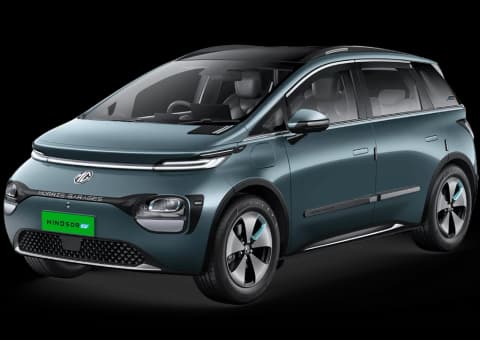
As of 2025, the following EVs offer BaaS schemes in India: MG Windsor EV (₹9.99L + ₹3.9/km), MG Comet EV, MG ZS EV, Tata Punch EV, Maruti Suzuki e-Vitara (₹3.99–4.39/km), Kia Carens Clavis EV (₹3.3/km), and select Citroen and Toyota models. MG Windsor is currently the most popular BaaS car in India, having pioneered the model in the mass-market segment.
BaaS is priced per kilometre, not as a flat monthly fee. Rates typically range from ₹3.3–4.5/km depending on the car and battery size. At 1,000 km/month, expect to pay ₹3,300–4,500/month in battery rental, plus your actual electricity charging cost (roughly ₹1–1.5/km extra). Most finance partners also charge a minimum monthly fee equivalent to 1,500 km even if you drive less - always confirm before signing.
Yes - BaaS is most financially rewarding for low-to-moderate drivers. If you commute 30–40 km daily (roughly 900–1,200 km/month), the lower EMI from the reduced purchase price offsets the per-km fee comfortably. However, check whether your chosen finance partner enforces a 1,500 km/month minimum - some do not, which makes BaaS even more flexible for light drivers. Avoid BaaS if you regularly exceed 1,500 km/month.
This is a critical point most buyers overlook. When selling a BaaS EV, the new buyer must either take over your battery subscription agreement or purchase the battery outright. This can complicate resale and may reduce the pool of buyers. Some manufacturers (like MG) offer a guaranteed buyback - for example, MG's '3-60 plan' promises 60% of the car's value after 3 years. Always disclose the BaaS status when listing your car.
Yes. Most BaaS providers offer a battery buy-out option after a minimum lock-in period (typically 1–3 years). You pay the residual value of the battery pack and become its full owner - ending all subscription fees. Alternatively, you can return the car to the manufacturer under specific exit plans. Read the fine print carefully before signing: lock-in periods, buyout pricing formulas, and exit penalty clauses vary significantly across brands and finance partners.